
Science
Living our Faith, Learning in Love
Aims
• to develop scientific knowledge and conceptual understanding through the specific disciplines of biology, chemistry and physics.
• to develop understanding of the nature, processes and methods of science through different types of science enquiries that help them to answer scientific questions about the world around them.
• to be equipped with the scientific knowledge required to understand the uses and implications of science, today and for the future.
Curriculum Intent
At All Saints’ we have a clear vision for science. Our vision is for science to inspire children; encouraging them to be inquisitive about the world; it nurtures their innate curiosity and enables them to develop a range of skills that are useful across their learning both now and in their future lives. Science is for everyone. Having an understanding of science allows people to make informed decisions about new technologies, their health and other important matters. We ensure that every child has a positive experience of science throughout their time at All Saints’. We believe inspiring science teaching arises from lessons that place scientific enquiry at the heart of our school’s science curriculum. It develops both scientific knowledge and conceptual understanding to a level where they can be used to understand the uses and implications of science, today and for the future.
Curriculum Implementation
At All Saints’, science is taught both through a thematic approach and as discrete lessons. We look for opportunities to combine scientific learning and learning of other subject areas in synergy to enhance understanding across the curriculum. An example of this is combining the science unit of electricity with a design and technology project. Where there is no obvious curriculum link, or we feel the scientific understanding would improve from a discrete unit, we teach in this style. Both approaches are effective - what is essential is that our goal of inspiring science lessons is the leading consideration when planning. Our science curriculum is designed to seamlessly integrate knowledge and skills, drawing directly from the National Curriculum. Teachers ensure that children not only become familiar with but also have ample opportunities to develop and apply their working scientifically skills, which include:
- Observation over time
- Comparative and fair testing
- Identifying and classifying
- Pattern seeking
- Researching using secondary sources
Our science curriculum is also drawn from:
- Developing Experts
- Kapow Primary
- PLAN Assessment
- Primary Science Teaching Trust
- Explorify
Curriculum Impact
The knowledge, skills and concepts that pupils gain from learning the subject.
A high quality of scientific education aims to develop a range of investigation and problem-solving skills that are transferable to other curriculum areas, particularly Geography, Mathematics and English. The children learn through varied and first hand experiences of the world around them. Children will:
• Acquire and effectively use new vocabulary.
• Build skills that enable them to collect, analyse and interpret a range of data gathered through practical investigation.
• Interpret a range of sources of scientific information, including reports, theories, diagrams, images and investigations.
• Develop research, interpretation and presentation skills which can then be disseminated using ICT, Art and Design and Mathematic mediums.
• Develop a respect for the materials and equipment they handle with regard to their own, and other children’s safety. We seek to inspire in children a curiosity and fascination about the world which will remain with them for the rest of their lives; to promote children’s interest and develop an enthusiasm and enjoyment of scientific learning and discovery. Children have the understanding that science has changed our lives and that it is vital to the world’s future prosperity
Assessment
Teachers monitor children’s progress and adjust their teaching accordingly. Assessment of the children’s work is ongoing to ensure that understanding is being achieved and that progress is being made. Practical lessons provide hands on, kinaesthetic learning ensuring concrete understanding. Assessment is largely based through questioning and verbal discussion, as well as recorded work. Feedback and marking of work is guided by the school’s Marking Policy and children are given time to respond to this feedback to progress their learning further. All staff use TAPS (Teacher Assessment in Primary Science) to complete end of unit assessments on the children and assess the children at: 1- Emerging, 2- Expected or 3- Exceeding.
Early Years
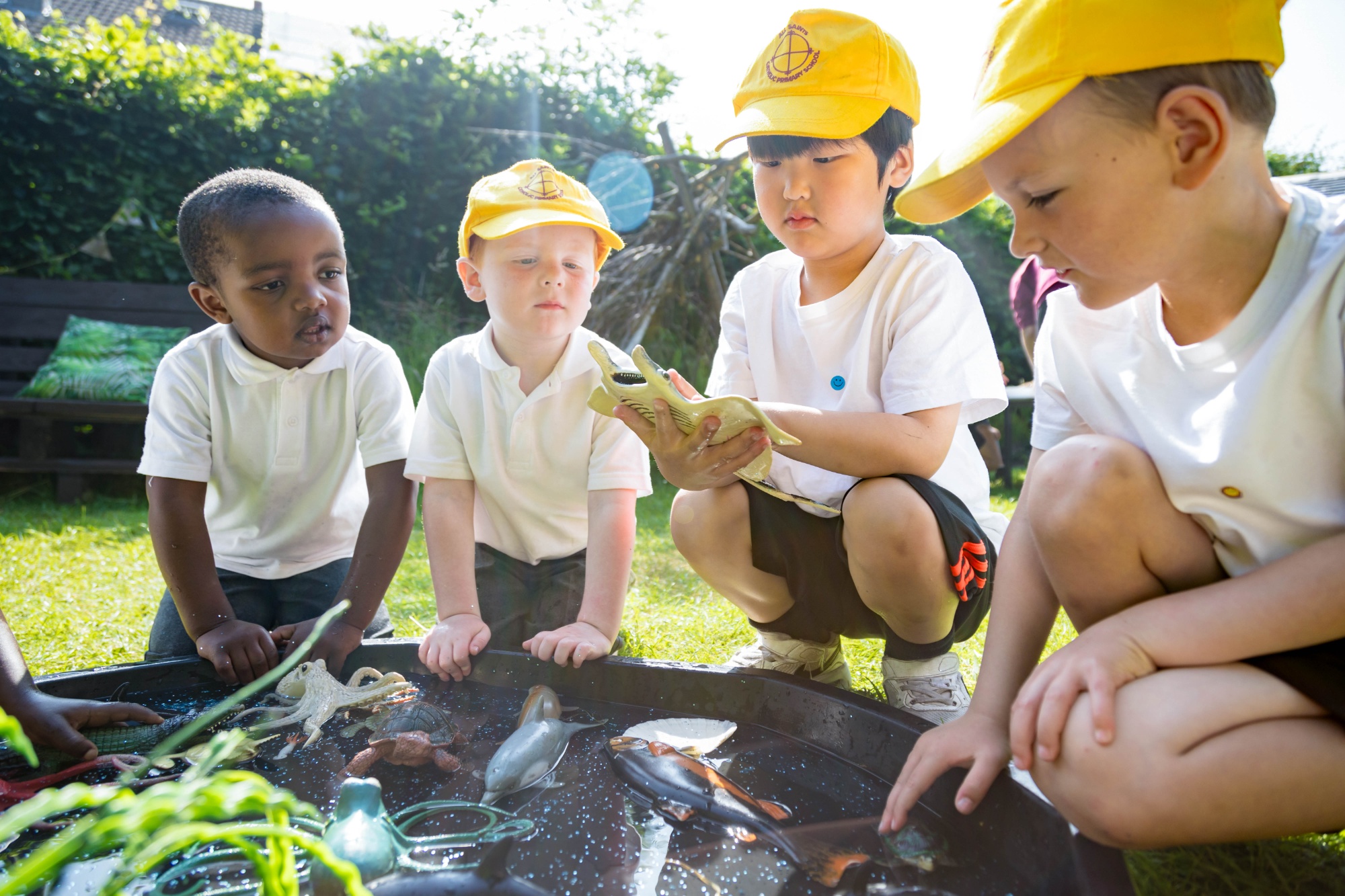
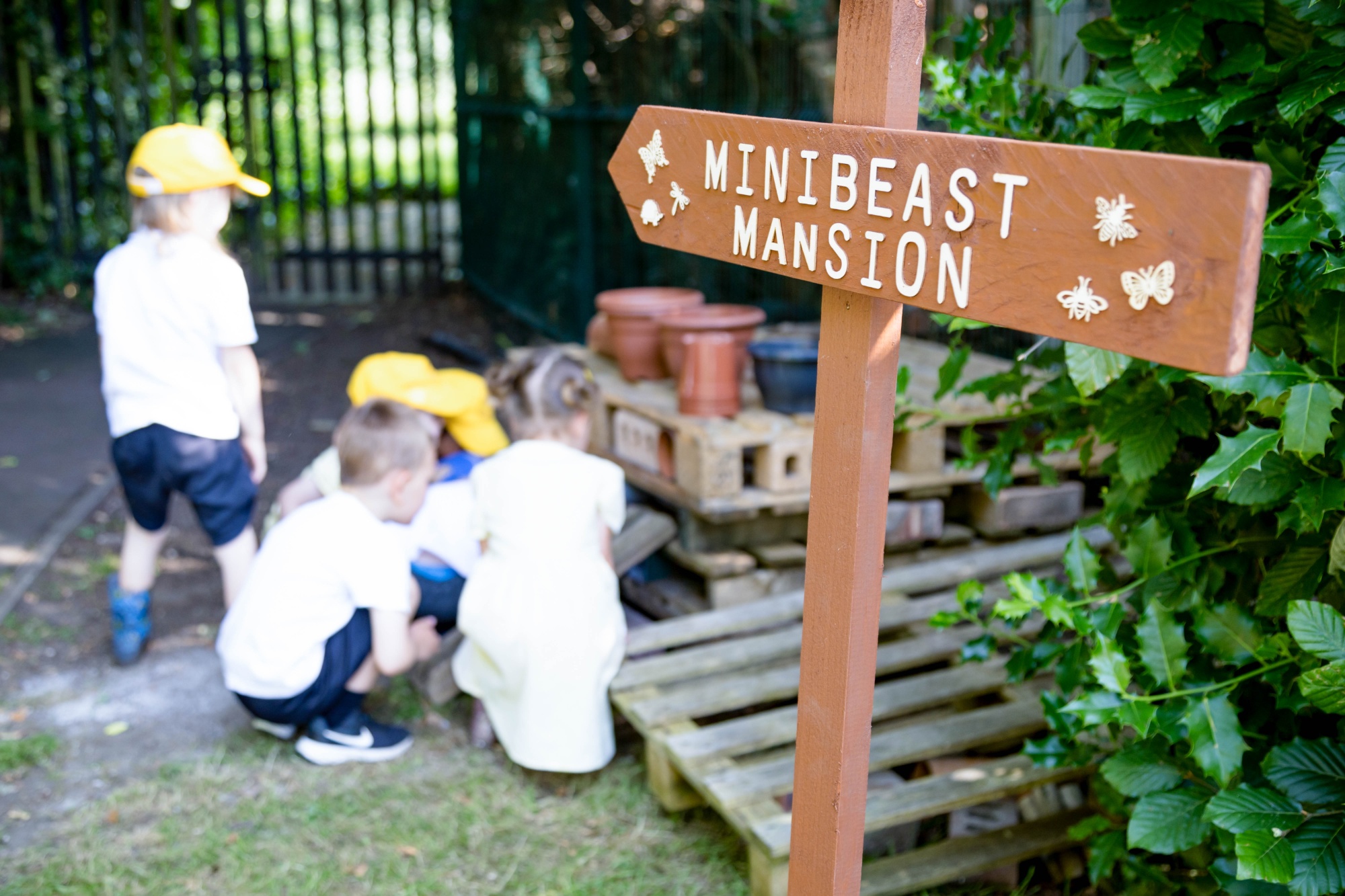
Science is an essential part of learning in the Nursery and Reception classes at our small primary school in Manchester. It is woven seamlessly into the topics explored throughout the year. While Science connects to many areas of the Early Years Foundation Stage (EYFS) framework, it most closely aligns with the ‘Understanding the World’ area. Through hands-on activities and exploration, children are encouraged to investigate their environment and develop curiosity about the natural world. In these early years, children focus on observing, questioning, and experimenting with everyday materials and living things in their local surroundings. This experiential approach nurtures their scientific thinking and lays a strong groundwork for future learning in Key Stage One and beyond.
Where is God in our learning?
At our Catholic school, we believe that God’s presence is woven throughout all areas of learning, including science. As we explore the wonders of the natural world, we see the creativity and wisdom of God reflected in every living thing and every natural process. Our science curriculum, grounded in the primary national curriculum objectives, encourages children to ask questions, investigate, and understand the world around them, recognising that God is the ultimate creator and sustainer of all life. From studying plants and animals to exploring materials and forces, our pupils are inspired to appreciate the beauty and order in creation, fostering a sense of awe, respect, and responsibility for the environment. In doing so, science learning becomes a way to deepen our faith, seeing God’s hand at work in all of creation.
SEND Learners
At All Saints’ Catholic Primary School, we are proud to offer an inclusive and practical Science curriculum that encourages all children, including those with Special Educational Needs and Disabilities (SEND), to explore, question, and make sense of the world around them. We believe that every child is created in the image of God and has unique talents to be nurtured and celebrated. All pupils, including those with SEND, are supported to access the same science curriculum, with lessons carefully adapted to meet individual needs and ensure everyone can succeed.